Geotechnical insight for complex engineering challenges
Advanced geotechnical engineering for complex projects
Geotechnical engineering connects the behavior of soil and rock with the structures, infrastructure and construction processes they support. Klar Israel combines geotechnical engineering, geology, geophysics and structural insight to solve demanding problems with an appropriate balance of analysis and judgment.
Turning ground information into design decisions
The geotechnical engineer converts limited and variable information about soil and rock into a defensible ground model, design parameters and practical recommendations. This requires the integration of field investigation, laboratory testing, soil and rock mechanics, soil-structure interaction and experience from comparable conditions.
Complex projects often require several construction scenarios, load cases and extreme events to be examined. Whether the method is analytical or numerical, the assumptions must remain transparent and the results must be tested for engineering plausibility.
Areas of advanced geotechnical practice
Numerical analysis
Modeling of complex soil-structure systems, staged construction and ground movement, supported by independent checks.
Explore numerical analysis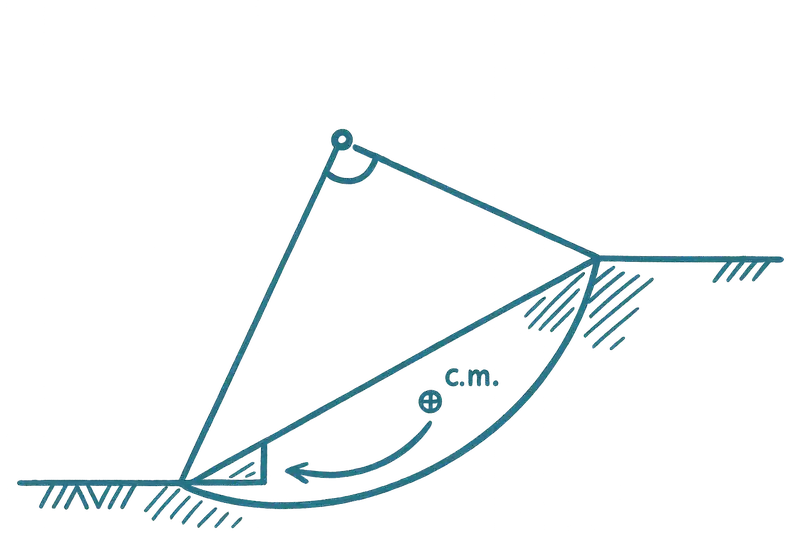
Slope stability and retaining structures
Static and seismic assessment of natural slopes, excavations and ground support systems.
Explore slope stability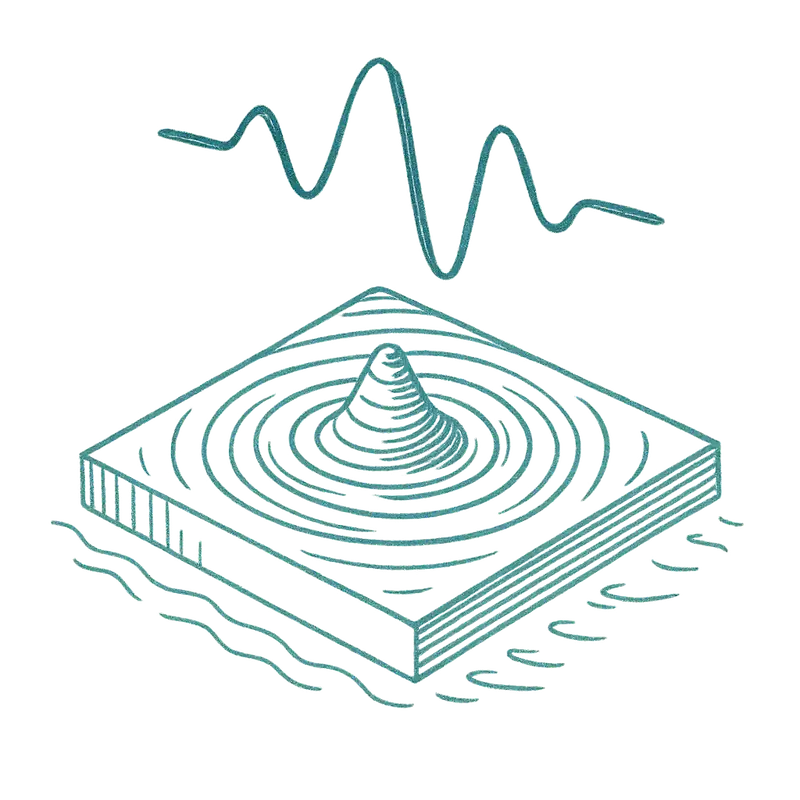
Seismic and dynamic design
Site response, geotechnical seismic hazards and foundation systems subjected to dynamic loading.
Explore seismic design
Quays and marine works
Geotechnical planning and design for ports, quays and other marine infrastructure.
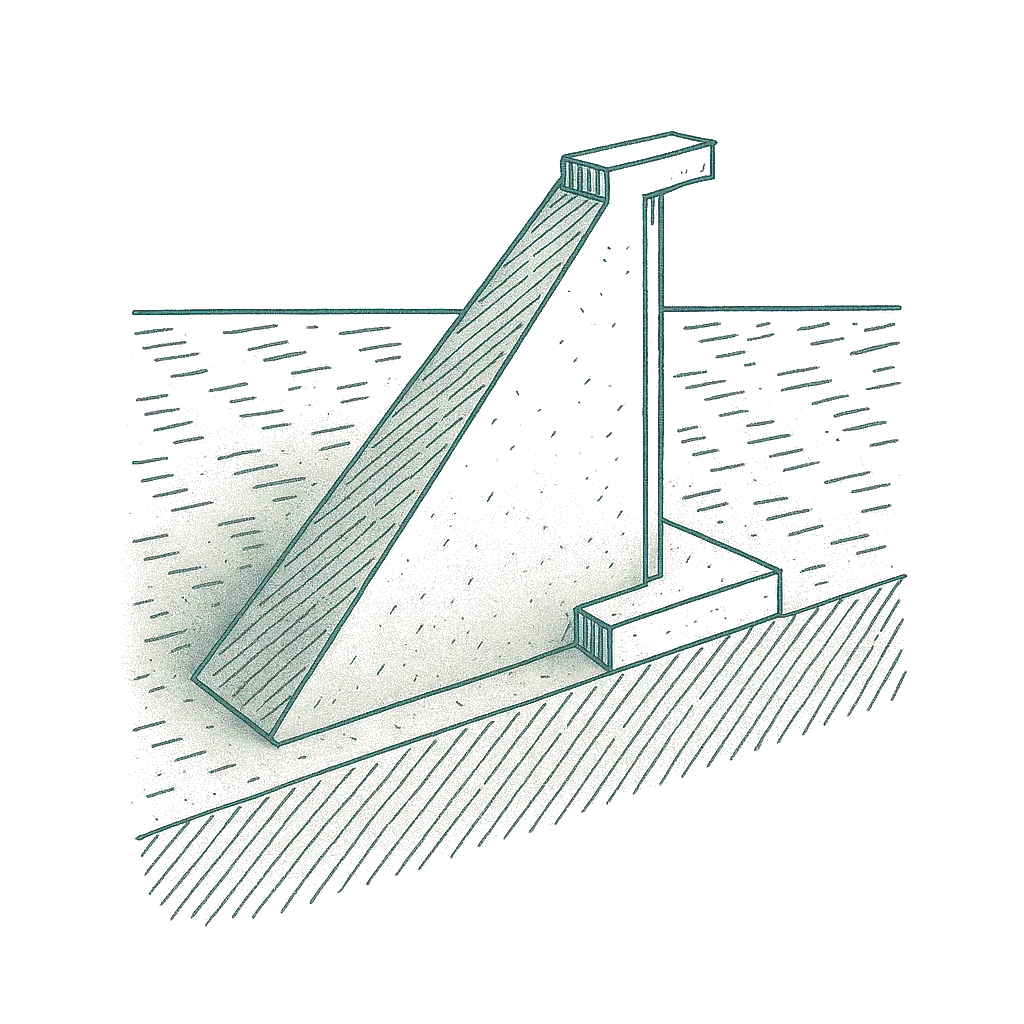
Reservoirs and earthworks
Site-specific design of reservoirs, embankments, fills and engineered earthworks.
Expert review and failure investigation
Independent review of geotechnical designs, construction findings, performance concerns and failures.
Advanced numerical analysis
When is numerical analysis required?
Numerical analysis becomes valuable when conventional calculations cannot adequately represent the geometry, construction sequence or interaction between the ground and the structure. Typical applications include deep excavations, tunnels, adjacent structures, complex foundation systems and projects in which nonlinear ground response governs performance. A well-designed model can trace the evolution of stress and movement through each construction stage and provide a consistent basis for comparing alternatives.
Analysis tools and specialized software
Klar Israel maintains licenses for PLAXIS 2D and PLAXIS 3D and uses a wider suite of established slope stability and geotechnical analysis programs. We have also developed finite element tools in-house for recurring specialist applications. These tools have undergone an extended verification process and support efficient analysis, consistent post-processing and clear reporting of results.
Calibration of constitutive models
A particular area of expertise is the selection of advanced constitutive models and the calibration of their parameters. Calibration draws on laboratory and field testing, in situ stress conditions, anticipated stress paths and the planned construction sequence.
The choice of model and parameters is central to the reliability of any numerical result. Klar Israel uses a calculation, calibration and review framework refined over many years. It includes comparison of test data with model response, sensitivity studies, alternative parameter sets and, where suitable observations are available, validation against measured behavior.
This process allows nonlinear response, stress-dependent stiffness, strain level, loading history and pore pressure development to be represented in a controlled manner. The objective is not maximum complexity. It is the level of complexity needed to answer the engineering question with results that can be reviewed, explained and used in design.
Numerical optimization of foundation solutions
We use numerical analysis to optimize foundation systems and address problems that fall outside routine design methods. Studies may compare foundation type, dimensions, depth, spacing, stiffness and construction sequence, and assess the consequences for stress transfer, movement and adjacent structures. The aim is a safe, buildable solution that avoids unnecessary conservatism and identifies meaningful opportunities to reduce cost or construction time.
Professional review and specialist collaboration
A numerical model is not a substitute for engineering judgment. Geometry, parameters, boundary conditions, construction stages and interpretation all require experience and a clear understanding of the physical system. We check results against complementary calculations, established solutions and comparable project behavior. For selected challenges, specialists from academia or overseas may join the team, subject to the needs of the project and their availability.
Slope stability and retaining structures
Stability assessment under static and dynamic conditions
Klar Israel evaluates natural and engineered slopes, excavations and retaining systems under static and dynamic loading, including earthquakes. The assessment identifies credible failure mechanisms and considers soil and rock conditions, groundwater, external loads and construction stages. Where appropriate, fully dynamic time-history analysis using earthquake records can be performed to examine how movement and stability develop during the seismic event.
Design of slope and excavation stabilization systems
In addition to defining the geotechnical parameters for design, Klar Israel works with the structural engineer to develop stabilization systems for slopes and excavations. Solutions may include soil nails, anchors, retaining walls, shoring, drainage and other measures selected for the governing failure mechanism and site constraints. The design considers the interaction between the ground, the stabilization elements and nearby structures.
Analytical, numerical and statistical capabilities
Klar Israel has developed substantial analytical and numerical capability in this field, including two-dimensional and three-dimensional modeling and purpose-built software for specialist applications. Where appropriate, we use statistical methods and risk analysis to represent natural ground variability, uncertainty in the available information and the probability of different failure mechanisms. This supports solutions that are both technically controlled and appropriately optimized for the project.
Seismic and dynamic design
Klar Israel combines geotechnical engineering, soil dynamics and soil-structure interaction to characterize site response, assess seismic hazards and design foundation systems subjected to dynamic loading.
Site-specific seismic response and geotechnical hazards
We specialize in site-specific response studies that establish the design response spectrum for the structural engineer. The study evaluates the soil and rock profile and its influence on expected ground motion, together with hazards such as liquefaction, seismic slope instability, landslides and local amplification.
Foundation systems under dynamic loading
Klar Israel has extensive experience in the design of piles and foundation systems for compressors and turbines. These systems require careful treatment of wave propagation through the ground, vibration transfer between foundation components, excitation frequencies and the natural frequencies of the complete system. The design must provide adequate damping and avoid interactions that amplify response or produce resonance.
Project-specific design and value
A site-specific response study and a dynamic design tailored to the actual project conditions can reduce unnecessary conservatism, focus the structural requirements and improve the foundation solution. Depending on the scale and risk profile of the project, this work may create material savings even when it is not explicitly required by regulation.
Team and professional development
Our engineers work alongside engineering geologists, geophysicists and structural engineers. Several members of the team hold master's degrees or doctorates in geotechnical engineering and tunneling. Read more about the education and professional development of geotechnical engineers.
The Klar Israel approach
Every project is assessed on its own ground conditions, consequences of movement, construction constraints and design objectives. Advanced tools are used where they add value, then checked against independent methods and the judgment developed through decades of practice.
Facing a complex geotechnical challenge?
Our team is available to review problems in buildings, infrastructure, transportation, tunneling and marine works.