A foundation solution tailored to the project
Foundation engineering for buildings, bridges and infrastructure
A sound foundation solution must account for several factors, including structural loads, ground and rock conditions, groundwater, the construction method and allowable movements. Klar Israel gives the structural engineer a clear geotechnical basis for selecting, developing and delivering the most appropriate solution.
From ground model to foundation strategy
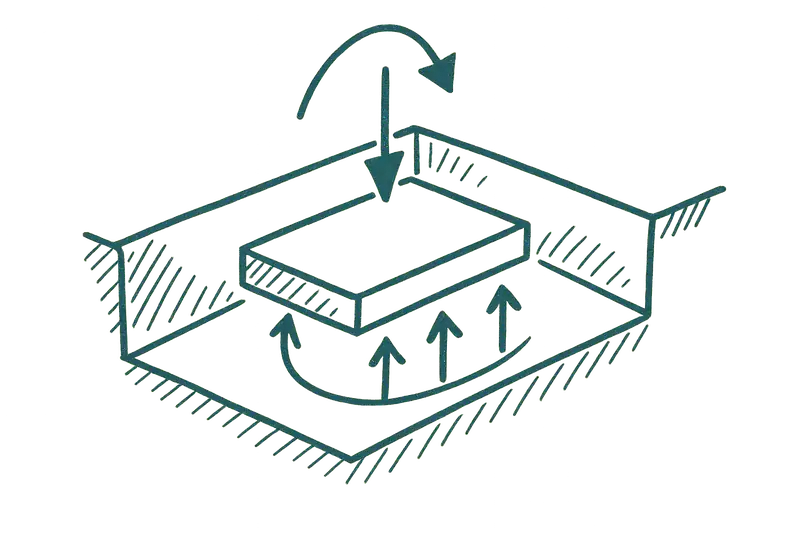
The geotechnical engineer considers the structural loads, soil and rock profile, groundwater, construction sequence and the structure's sensitivity to movement. The resulting foundation strategy addresses bearing resistance, total and differential settlement, group effects, constructability and potential effects on neighboring structures or infrastructure.
The aim is not to select a standard detail from a catalog. It is to identify the solution that best fits the project and test it against safety, serviceability, construction risk, schedule and cost.
A coordinated design process
- Review available geological, geotechnical and project information
- Plan the ground investigation around the proposed geometry and loading
- Develop design parameters and assess foundation response
- Compare foundation options with the structural and construction teams
- Provide recommendations, review design development and support construction
Foundation engineering across project types
Klar Israel advises on foundations for buildings, bridges, infrastructure facilities, marine works, reservoirs and renewable energy installations, including solar farms and wind turbines. Our experience ranges from focused local assignments to major projects in Israel and more than 25 countries.
Soil-structure interaction
For complex projects, foundation response cannot be separated from structural stiffness, construction sequence or ground movement. Our team uses analytical and numerical methods to study the system as a whole, then checks the results against independent calculations and experience from comparable projects.
Information for an initial review
Useful starting information includes the site location and survey, architectural or engineering drawings, the structural concept and loads, proposed levels and any existing geological, geotechnical or previous construction records.
Planning a project with foundation challenges?
Send us the available site and project information. We will review the engineering context and help define the appropriate scope.